AI tools have become the go-to solution for small businesses trying to grow faster online. Content is easier to produce, captions are quicker to write, and ideas never seem to run out.
Yet many business owners quietly share the same concern:
“We’re posting more than ever… but engagement feels flat, and sales aren’t moving.”
So what’s happening?
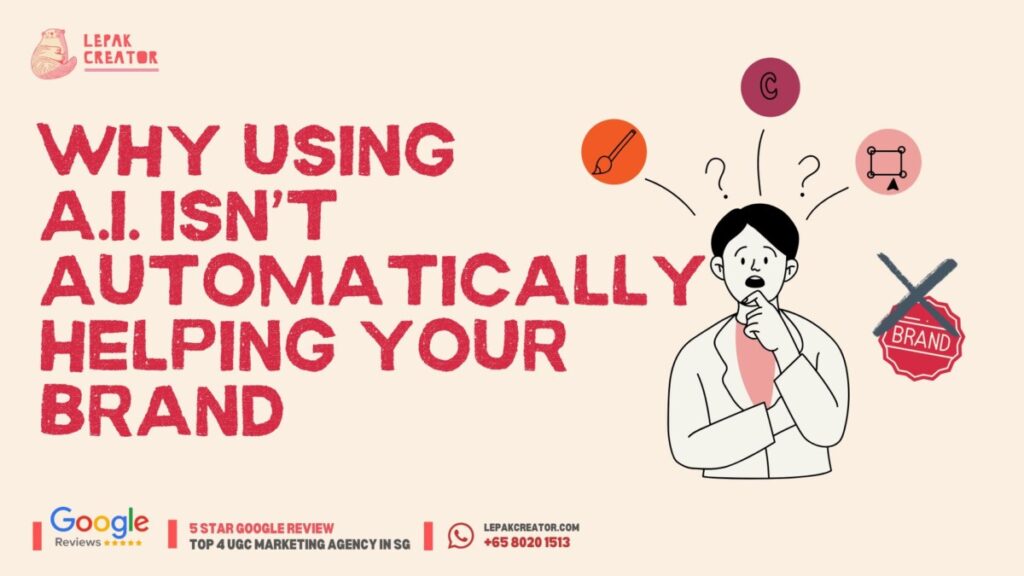
The issue isn’t AI itself — it’s how AI is being used without brand clarity, strategy, and human intent.
Here’s what research, marketing experts, and real business owners have consistently observed.
1. AI speeds up output, not brand thinking
AI is excellent at generating content, but it doesn’t define positioning, purpose, or long-term brand direction. Without a clear strategy, businesses end up producing more content that doesn’t move people.
2. Generic content weakens differentiation
Many AI outputs sound polished — but also familiar. When multiple brands use similar prompts, messaging starts to blend together, making it harder for customers to remember who you are.
3. Audiences can sense “templated” communication
Customers today are highly content-aware. When captions, emails, or replies feel automated or emotionally flat, trust drops — even if the information is technically correct.
4. Brand voice often gets lost
AI doesn’t naturally understand your tone, values, or cultural nuance — especially important in Singapore’s diverse market. Without strong guidance, your brand may sound inconsistent or disconnected.
5. Over-automation reduces human connection
Replacing too many touchpoints with AI (DMs, comments, replies) can make brands feel distant. Engagement may increase in volume, but decrease in depth.

6. AI cannot read emotional context
AI doesn’t truly understand customer fears, hesitations, or motivations — especially in trust-based industries like coaching, wellness, education, or services. This limits its ability to convert attention into sales.
7. Tools are mistaken for strategy
Many businesses adopt AI expecting it to fix marketing problems. In reality, AI only amplifies what already exists — clarity or confusion.
8. Similar prompts create similar brands
Without original insights, lived experiences, or real customer stories, AI-generated content risks making your brand look interchangeable with competitors.
9. Inaccuracies can quietly damage credibility
AI can “hallucinate” or oversimplify facts. Publishing unchecked content may not cause immediate backlash — but it slowly erodes authority and trust. Always check facts humanly even using AI for fact check,
10. More content ≠ better sales
Sales are driven by relevance, resonance, and trust — not volume alone. Businesses posting frequently without strategic alignment often see activity without results.
So… Is AI Bad for Branding?
No.
But AI without brand clarity, human oversight, and intention often underperforms.
The brands seeing results use AI as:
- A support tool, not a replacement
- A thinking partner, not the decision-maker
- An amplifier of clarity, not a shortcut around it
Key Takeaway for SMEs & Startups
If AI content isn’t helping your brand or sales, the problem is rarely the tool.
It’s usually:
- unclear positioning
- weak messaging foundations
- or missing human perspective
AI works best after your brand knows who it is, who it’s for, and what it stands for.