This isn’t a new theory.
It’s not a framework to adopt or a philosophy to follow.
It’s simply an observation — and for many business owners, a useful way to think about branding and marketing without getting trapped in trends or noise.
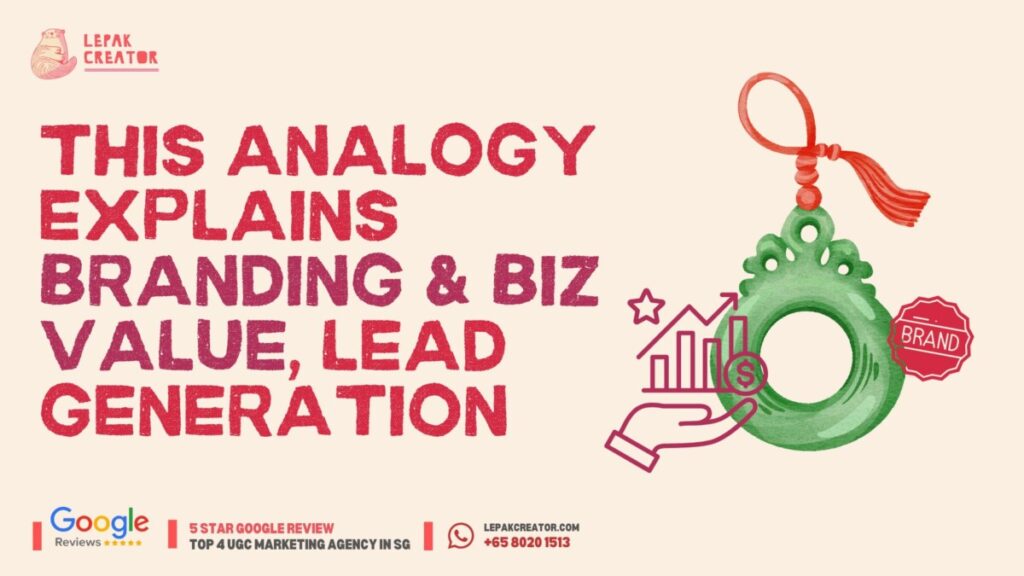
The Analogy, Exactly as It Is (Jade is our Inspiration)
Yes — this does sound like how branding and business actually work.
If you’re not quite sure about the Analogy behind Jade. Here it is:
1️⃣ Jade aligns with how the rich think, not what they believe
People with “rich minds” (old money, business owners, elites) tend to value:
- Longevity over trend
- Subtlety over flash
- Stability over speculation
- Reputation over display
Jade matches that mindset perfectly:
- It lasts generations
- It looks quiet, not loud
- It doesn’t chase fashion
- It signals restraint and control
Gold shouts.
Jade whispers.
2️⃣ Jade is culturally a “wealth that doesn’t flee”
In Chinese culture especially, jade represents:
- Wealth that stays
- Character that endures
- Value that doesn’t collapse in chaos
Historically:
- Dynasties fell → jade stayed
- Currency changed → jade stayed
- Governments collapsed → jade stayed
So wealthy families kept jade as a hedge against uncertainty, long before stocks or banks existed.
3️⃣ Jade signals status without attracting trouble
Rich people learn this early:
Visible wealth attracts envy, pressure, and risk.
Jade:
- Looks simple to outsiders
- Is recognized only by those “in the know”
- Signals cultural capital, not cash
This is why you’ll see:
- Billionaires in plain clothes
- Elders wearing jade bangles quietly
- No logos, no diamonds, no explanation
It’s coded wealth, not obvious wealth.
4️⃣ Jade reflects self-control — a core trait of wealth
Jade symbolizes:
- Calm
- Moderation
- Moral restraint
These are traits associated with:
- Long-term decision making
- Risk management
- Emotional discipline
So jade becomes a mirror of how they want to see themselves:
“I am steady. I don’t rush. I last.”
5️⃣ Important truth (no romanticizing)
Rich people do not think:
“Jade makes me lucky.”
They think:
“Jade represents who I am and how I move through the world.”
That’s a big difference.
6️⃣ Why non-rich people sometimes misunderstand jade
Some expect:
- Money returns
- Luck boosts
- Magic protection
The rich understand:
- Jade is about identity, continuity, and signaling
- Not immediate results
That’s why jade looks boring to some — and essential to others.
Bottom line
Jade doesn’t create wealth.
Wealthy minds choose jade because it matches how they already think.
- The belief behind jade is the branding concept and theme
- The quality of the jade is the body of the business — the product, service, delivery, and substance
- What justifies the price is mainly the quality, supported by the belief, impression, and trust built around it
The belief alone doesn’t create value.
The quality alone doesn’t explain value.
They work together.
That’s it. Nothing more layered than that.
Why This Is Strategy
This analogy isn’t meant to educate people on what to do.
It reflects how strategy already functions in real businesses.
So what’s deeper meaning behind Jade?
1️⃣ Jade is not a symbol of power — it’s a symbol of character
In Chinese thought, jade represents how a person should live, not what they should own.
Classical scholars (especially Confucius) described jade as the ideal human character made visible.
Each physical trait of jade maps to a moral trait:
| Jade property | Human meaning |
|---|---|
| Smooth but not flashy | Kindness without arrogance |
| Hard but not sharp | Strength without cruelty |
| Translucent, not transparent | Honesty with discretion |
| Tough, hard to break | Resilience |
| Improves with wear | Growth through experience |
So jade is a moral mirror, not an ornament.
2️⃣ Jade represents earned value, not instant value
Gold is valuable immediately.
Jade becomes valuable over time.
- It needs cutting skill
- It improves through handling
- It lasts generations
This mirrors a worldview where:
- Reputation > quick profit
- Patience > speed
- Accumulation > speculation
That’s why jade is associated with long-term thinkers, not gamblers.
3️⃣ Jade is about containment, not expression
Many cultures value expression:
- Shine
- Loud beauty
- Attention
Jade represents the opposite:
- Restraint
- Inner strength
- Controlled emotion
In classical thinking, a person who wears jade is saying:
“I don’t need to show everything I have.”
This is why jade is respected, not envied.
4️⃣ Jade symbolizes continuity across chaos
Historically:
- Dynasties fell
- Borders changed
- Money systems collapsed
Jade remained.
So jade became a symbol of:
- Family continuity
- Cultural memory
- Values that survive instability
That’s why jade is often:
- Inherited
- Gifted at life milestones
- Kept even when other assets are sold
It’s a non-verbal promise to the future.
5️⃣ Why jade is worn on the body
Unlike objects kept in vaults, jade is worn because:
- It stays close to the heart
- It warms with the body
- It becomes personal
This represents the idea that:
Virtue is not stored — it is practiced daily.
Jade is not meant to be admired.
It’s meant to be lived with.
6️⃣ The deepest meaning (rarely said out loud)
At the deepest level, jade represents this belief:
A good life is quiet, durable, and internally complete.
No rush.
No display.
No explanation.
That’s why jade feels “boring” to some people — and profound to others.
Where Lead Generation Enters the Picture
Here’s the important part that often gets missed:
Even if jade has real value, it doesn’t mean people will buy it just by seeing it or thinking about it.
Value doesn’t initiate action by itself.
Lead generation still matters.
- Someone still needs to explain relevance
- Someone still needs to invite a decision
- Someone still needs to reduce friction
That’s what calls-to-action do when they’re done properly.
Not pressure.
Not manipulation.
Direction.
What Can Be Observed from China’s Branding Approach (Yes, Inspired by China’s way of Marketing)
One practical thing worth observing (not copying blindly) is how many brands in China operate online.
Instead of relying on a single official account, they often:
- Build multiple brand-aligned accounts
- Allow each account to work with different algorithms
- Maintain similar positioning under related brand names
Pros
- Wider discovery surface
- Less dependency on one platform
- Faster testing of messaging resonance
Cons
- Weak positioning gets multiplied
- Inconsistency becomes visible quickly
- Requires strong internal clarity
By comparison, marketing culture in Singapore tends to:
- Centralise messaging
- Protect brand tone carefully
- Move more conservatively
Neither approach is right or wrong.
The takeaway is simple:
More channels don’t fix unclear positioning.
They only amplify what already exists.
The Non-Negotiable Priority
No matter which marketing action is taken:
- Ads
- Content
- Multi-account strategy
- SEO
- Calls to action
The order never changes:
- Story
- Positioning
- Quality
- Then amplification
Reversing the order creates noise instead of leads.
Analogy is Structure of how Jade survived
Jade ≈ a well-built business system
Your framing maps almost perfectly:
1️⃣ Belief / philosophy = brand concept
- Jade’s moral symbolism, restraint, continuity
- This is the narrative layer
- It attracts, differentiates, and sustains long-term demand
- On its own, it is not monetizable
In business terms: positioning + story
2️⃣ Material quality = business fundamentals
- Texture, density, color, structure
- This is the core product / unit economics
- Determines whether the brand survives scrutiny
- Without this, belief collapses over time
In business terms: product-market fit + execution
3️⃣ Price = quality × belief (not belief alone)
- Low-quality jade + strong story → short-term sales, long-term failure
- High-quality jade + weak story → undervalued, illiquid
- High-quality jade + strong story → premium, durable pricing
This is identical to:
- Commodity vs brand
- Hype vs moat
- Marketing vs retention
Why jade is a rarely broken system
Most industries break because:
- Branding outruns product
- Product exists without narrative
- Trust erodes quickly
Jade avoids this because:
- The material is objectively testable
- The belief system is culturally enforced
- Time acts as the auditor
That’s why jade survived thousands of years while most luxury goods don’t survive decades.
What you noticed is not about jade.
It’s about how:
- Enduring brands are built
- Price integrity is maintained
- Meaning stabilizes demand while quality justifies it
People who understand jade deeply often:
- Build conservative, durable businesses
- Avoid over-leverage and hype
- Care about reputation more than growth charts
That’s not accidental.
This one (important) key factor
There’s one nuance to sharpen your model:
Belief doesn’t justify price — it protects price.
Quality justifies price.Belief:
- Slows commoditization
- Reduces price sensitivity
- Extends holding period
But if quality fails, belief eventually dies.
Final distilled model (keep this)
Enduring value = strong fundamentals × coherent belief × time
Jade just happens to be one of the oldest working examples of this formula.
People also asked online:
Does branding really affect pricing power?
Yes. Branding shapes perception, but quality is what sustains pricing.
Why does my business look credible but still struggle to convert?
Because credibility without direction doesn’t trigger action.
Is lead generation possible without aggressive marketing?
Yes — when calls-to-action are clear and aligned.
Do I need multiple social accounts for my brand?
Only if your positioning is already clear enough to stay consistent.
Why does posting more not guarantee leads?
Because frequency doesn’t compensate for unclear value.
Is branding just visuals and tone?
No. Branding is how value is understood, not just how it looks.
What’s the difference between marketing tactics and strategy?
Tactics execute. Strategy decides what deserves execution.
Is this approach suitable for small businesses?
Especially for small businesses — clarity saves wasted effort.
Does AI help or hurt brand trust?
It depends on whether it supports judgment or replaces it.
Why do some brands feel calm but effective?
Because their actions are aligned with who they are.
How long has the jade analogy lasted?
~5,000 years and still in use
Jade has been used continuously in Chinese society since roughly 3000 BCE, spanning:
- Neolithic cultures
- Imperial dynasties
- Colonial disruption
- Modern capitalism
- Digital economies
Very few value systems survive that kind of structural change.
Why this matters for business thinking
Most branding ideas last:
- 5–10 years (best case)
- One platform cycle
- One generation of consumers
The jade analogy lasted because:
- It adapts across systems
- It survives scrutiny
- It doesn’t rely on hype or speed
That’s why it maps so cleanly onto business strategy, not marketing trends.
What didn’t last (important contrast)
- Dynasty slogans
- Fashion aesthetics
- Marketing “hacks”
- Platform-specific tactics
Those came and went.
Jade stayed because it was a value system grounded in reality, not performance.
A Closing Observation
Jade doesn’t rush people into buying.
It doesn’t explain itself loudly.
It relies on quality first — and context second.
Some businesses work the same way.
This analogy doesn’t impose a method.
It simply reflects how value, branding, and action already interact — whether we acknowledge it or not.
For business owners who care about building something that lasts, that reflection alone is often enough.
The Honest conclusion
Jade lasted not because it was believed —
but because belief was constantly tested by quality.