
Most small businesses don’t struggle because their product is weak.
They struggle because no one can find them, trust them, or understand them fast enough online.
This is where our team at Lepakcreator help brand positions themselves differently—we’re not a “content vendor” or “creation production house” but we’re more of a digital perception builder that helps new or invisible brands appear structured, established, and purchase-ready from day one.
This article breaks down a casestudy (Sleep Well Tonight Lavender Pillow Mist) and how we work on it using a real SEO and intent-driven framework inspired by how brands are positioned for discovery, trust, and conversion.
1. The Core Problem: Why Most New Brands Don’t Sell Online when they’re trying to Sell Online
Before strategy, we start with reality.
Most new brands fail online due to:
- No search visibility (zero SEO footprint)
- No structured messaging (confusing positioning)
- No trust signals (no FAQs, reviews, authority content)
- No intent alignment (content does not match buyer thinking)
Common search behaviors from buyers:
People don’t search like this:
“I want your brand”
They search like this:
- “does lavender spray help with sleep naturally”
- “best pillow mist for insomnia Singapore”
- “how to sleep better without medication”
- “is lavender safe for daily use on pillow”
If your brand content does not match these real queries, you don’t exist in search ecosystems.
2. What Lepakcreator Actually Does (Strategic Positioning)
Instead of just purely “posting content,” Lepakcreator builds:
1. Search Intent Architecture
Mapping what people actually type into Google:
- Problem-aware searches
- Solution-aware searches
- Product comparison searches
- Purchase-ready searches
2. Content Authority Layering
Turning one product into:
- Blog articles
- FAQ clusters
- Geo-targeted answers (Singapore-specific)
- Educational explainers
3. Conversion Framing
Structuring content so users move from:
confusion → understanding → trust → purchase decision
Shorten customer’s buying journey >> convert to sales.
3. Example Framework: Sleep & Wellness Product SEO Mapping
Using Sleep Well Tonight Lavender Pillow Mist as a model, here is how intent mapping works.
Micro-Intent Keyword Clusters (Search Behaviour Layer)
Pain-Based Queries
- “why can’t I sleep at night even when tired”
- “stress makes me unable to sleep what to do”
Solution-Based Queries
- “does lavender spray help you sleep scientifically”
- “lavender pillow mist benefits explained”
Purchase Intent Queries
- “Sleep Well Tonight lavender mist review”
- “best pillow spray for deep sleep in humid weather”
4. Geo-Targeted SEO (Singapore Sleep Context Layer)
Local intent matters because sleep problems are environmental.
High-intent local questions:
- “Is lavender sleep spray effective in Singapore humid weather?”
- “Can pillow mist help with air-conditioned room sleep issues?”
- “What is the best natural sleep solution for Singapore stress lifestyle?”
👉 These queries bridge product + geography + lifestyle pain points
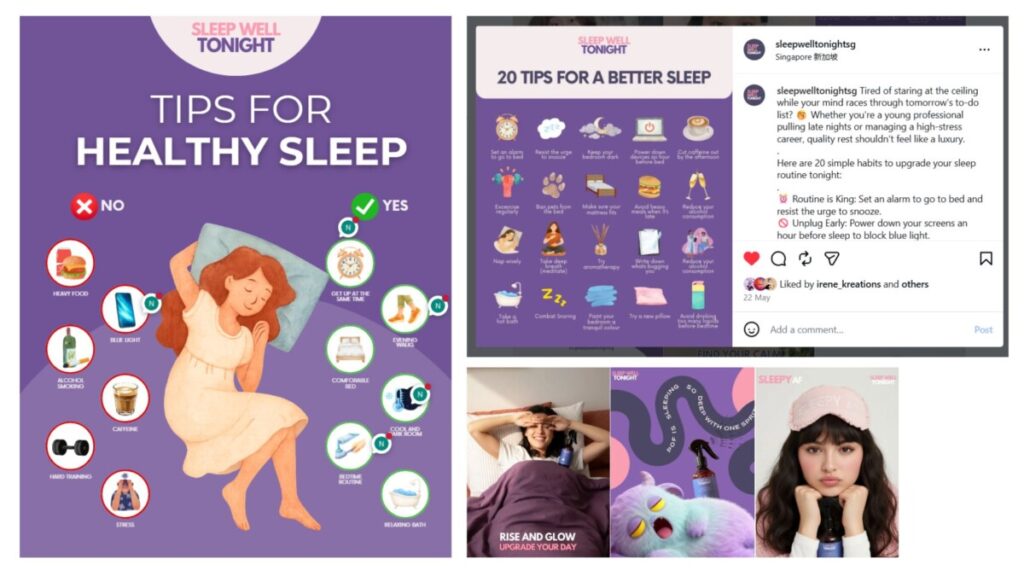
5. Blue Ocean SEO Questions (Low Competition, High Authority)
These are questions most brands ignore—but they rank well because they are informational gaps.
Science + Behaviour Questions
- “Why does lavender scent make the brain feel calm instantly?”
- “Can scent conditioning improve sleep over time?”
- “Does repeating the same bedtime scent train sleep response?”
Ingredient Authority Questions
- “What is lavandin and how is it different from lavender?”
- “Why does Oregon lavender have stronger fragrance than France lavender?”
- “Which lavender type is best for sleep quality?”
Most lavender products are typically sourced from regions like France or Hokkaido, so introducing Oregon as the origin requires additional consumer education—since audience perception and familiarity tend to differ.
However, instead of treating this as a limitation (or SWOT “threat”), it can be reframed as a strategic opportunity to differentiate and elevate positioning. Lavender grown in Oregon is cultivated under distinct climatic conditions compared to traditional European regions such as Provence, which can result in a more robust and intensified aromatic profile—an angle that strengthens both product uniqueness and perceived value when communicated clearly.
6a. SWOT Analysis Framework for Brand Growth
This is how Lepakcreator helps brands clarify positioning for sales conversion.
Strengths (Internal)
- Unique product origin story (ingredient sourcing / formulation)
- Emotional value (sleep, relaxation, anxiety relief)
- Sensory branding (scent-based experience = strong recall)
Weaknesses (Internal)
- Low brand awareness at launch
- No SEO footprint initially
- No trust assets (reviews, FAQs, authority articles)
Opportunities (External)
- Rising demand for natural sleep solutions in Singapore
- Increased search for non-medication stress relief
- Growth of wellness + self-care content consumption
Threats (External)
- Competing generic aromatherapy brands
- Over-saturated “lavender spray” keyword space
- Consumer skepticism due to fake wellness claims online
👉 Lepakcreator’s role as a Strategist is to convert weaknesses into structured visibility assets.
6b. SWOT Analysis Framework for Product Foundation
(Sleep Well Tonight Lavender Pillow Mist)
Strengths
- Unique ingredient positioning: Lavandin (lavender hybrid) known for stronger aromatic intensity
- Sourced from Oregon lavender farms, offering a differentiated origin story vs common France/Hokkaido supply
- Clear functional benefit: supports relaxation and sleep onset through scent-based ritual
- Easy-to-use format (pillow mist) fits modern bedtime routines without complexity
- Strong sensory product (immediate emotional response through aroma)
Weaknesses
- Low initial brand awareness and limited trust signals (new product in market)
- Requires education on lavandin vs English lavender to avoid consumer confusion
- Aromatherapy category may face skepticism around effectiveness
- Results are subjective (not instantly measurable like pharmaceutical sleep aids)
- Dependence on scent preference (not universally appealing to all users)
Opportunities
- Rising sleep issues in Singapore (stress, overthinking, screen fatigue, humidity discomfort)
- Growing demand for natural, non-medication sleep solutions
- Content SEO opportunities around “how to sleep better naturally” and “sleep anxiety remedies”
- Differentiation through Oregon origin story (less saturated vs France/Hokkaido lavender narrative)
- Potential to build “sleep ritual lifestyle” branding (not just product selling)
- Expansion into wellness ecosystem (pillow sprays, sprays, sleep kits, relaxation bundles)
Threats
- Highly saturated wellness and aromatherapy market with similar lavender-based products
- Competitors using lower pricing strategies with mass-market lavender oils
- Consumer misinformation or skepticism toward aromatherapy efficacy
- Strong dominance of established origin narratives (France Provence lavender perceived as “gold standard”)
- Substitution risk from alternative sleep aids (melatonin, teas, supplements, devices)
7. Buyer Journey Compression Strategy (How Content Becomes Sales)
Instead of waiting for ads, Lepakcreator builds search funnels:
Stage 1: Awareness (Compress discovery time)
- SEO: sleep anxiety, insomnia, natural sleep fixes
- Goal: intercept emotional problem, not product search
Stage 2: Education (Compress trust formation)
- Lavandin explanation
- Oregon sourcing differentiation
- “why lavender works scientifically”
Stage 3: Validation (Compress hesitation)
- ritual usage framing
- expectation setting (“gentle sleep onset support”)
- sensory outcome storytelling
Stage 4: Conversion (Compress decision friction)
- simple use case clarity
- low cognitive load CTA (“spray before sleep”)
- remove comparison complexity
Stage 5: Retention (Compress repeat purchase cycle)
- bedtime ritual embedding
- routine-based content
- sleep habit reinforcement
8. FAQ SEO (People Also Ask Optimization Section)
❓ What is a lavender pillow mist used for?
❓ Does lavender spray actually help you sleep?
❓ Is lavandin different from normal lavender?
❓ Is lavender pillow mist safe for daily use?
❓ Can I use lavender spray in Singapore humid weather?
❓ Where should I spray pillow mist for best effect?
9. Emerging Search Trends (What People Are Starting to Ask)
These are rising queries based on behavioural SEO patterns:
- “how to build sleep routine that actually works”
- “why do I wake up at 3am every night”
- “natural alternatives to melatonin Singapore”
- “does scent affect sleep quality scientifically”
- “best bedtime ritual for anxiety minds”
👉 These represent future “People Also Ask” domination opportunities
10. Final Insight: Why Lepakcreator’s Method Works
Most brands try to “sell first.”
Lepakcreator builds search presence first, then converts that attention into trust.
Instead of:
“Here is my product”
The strategy becomes:
“Here is your problem → here is your answer → here is why this product exists in that solution system”
This is how a brand with zero presence becomes:
- searchable
- credible
- structured
- and conversion-ready
Closing Thought
In modern SEO as well as AI search, visibility is not about being loud.
It is about being clear and answerable.
And brands that win search are not always the biggest—and in this case,
they are the ones that understand what people are actually trying to solve at 2AM when they can’t sleep.