Why Traditional Websites No Longer Convert
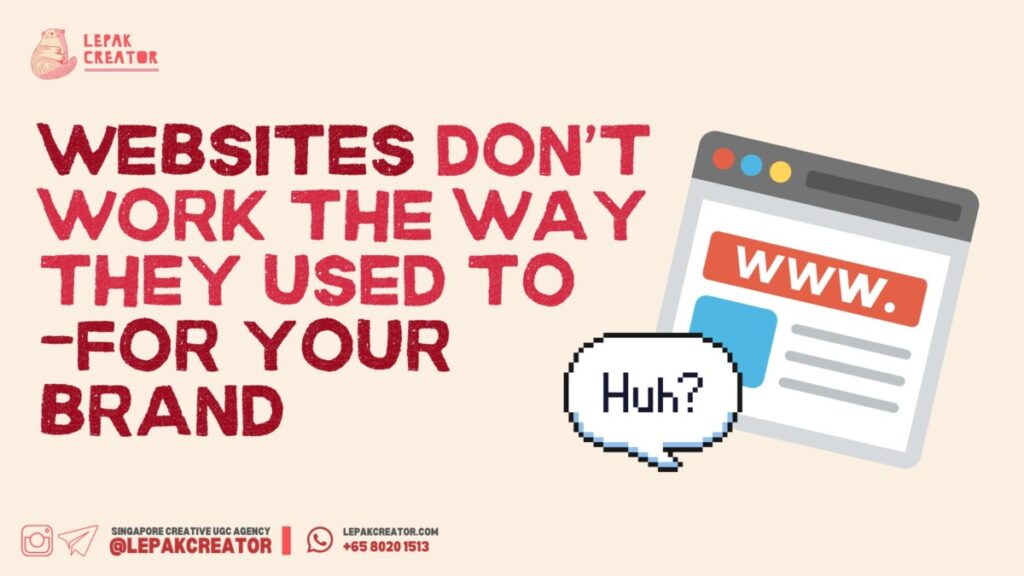
For decades, websites followed a predictable structure: Home, About, Services, Portfolio, Contact. While this layout once worked, it is increasingly ineffective in 2026. Modern users are more distracted, skeptical, and emotionally driven than ever before. They don’t browse websites leisurely—they scan, judge, and decide within seconds.
The result?
Many beautifully designed websites still fail to convert.
The core issue isn’t design—it’s hierarchy and credibility.
In 2026, high-performing websites are no longer digital brochures. They are decision-making systems built on brand credibility, guiding users toward clarity, trust, and action.
This article breaks down:
- Why traditional website hierarchies fail
- How modern website hierarchy works
- Why brand credibility is now the central conversion layer
- How to structure your website for trust, persuasion, and conversion
Traditional Website Hierarchy: Why It’s Less Effective Today
The Old Website Model
Home
├── About Us
├── Services
├── Portfolio
├── Blog
└── Contact
Why This Structure Fails in 2026
- Company-Centric, Not User-Centric
Traditional sites talk about the brand before understanding the visitor’s problem. - Delayed Trust Building
Credibility is hidden in “About” or “Testimonials” pages—far too late. - Assumes Rational Decision-Making
Modern users decide emotionally first, then justify logically. - High Cognitive Load
Too many choices without guidance cause decision paralysis. - Conversion Is Treated as the End Goal
“Contact Us” is a dead-end, not the start of a relationship.
The Modern Website Hierarchy (2026 Model)
Modern websites are built around how humans decide, not how companies are organized.
The New Hierarchy Framework
Intent-Based Entry
↓
Instant Clarity
↓
Emotional Validation
↓
Brand Credibility
↓
Guided Choices
↓
Low-Friction Action
↓
Post-Conversion Trust Building
At the center of this hierarchy is brand credibility—not as a page, but as a layer woven throughout the entire experience.
What Brand Credibility Means in 2026
Brand credibility is no longer just:
- Logos
- Testimonials
- Years of experience
In 2026, credibility is perceived trustworthiness at every interaction point.
Modern Brand Credibility Includes:
- Clarity of positioning
- Transparency of process
- Emotional intelligence
- Consistency of message
- Proof of understanding the user’s pain
- Evidence of results and expertise
Credibility answers one subconscious question:
“Can I trust you to understand me and not waste my time or money?”
Layer 1: Intent-Based Entry Points (Every Page Is a Homepage)
Modern websites no longer rely on a single homepage.
Modern Entry Sources:
- Main pages (SEO-optimise)
- Social media links
- Ads landing pages
- Email campaigns
- Community links
Each entry point is designed around specific user intent:
- “I’m confused”
- “I’m overwhelmed”
- “I’ve tried before and failed”
- “I’m ready to invest”
SEO Advantage:
Intent-based pages rank better because they align with long-tail, question-based searches.
Layer 2: Instant Clarity (Above-the-Fold Authority)
Within 3–5 seconds, your website must communicate:
- Who this is for
- What problem you solve
- What outcome you provide
- Why you’re credible
Example (Modern vs Traditional)
❌ Traditional:
“We are a full-service digital marketing agency.”
✅ Modern:
“We help overwhelmed business owners turn content into consistent leads—without burnout or guesswork.”
This is credibility through clarity, not claims.
Layer 3: Emotional Validation (Trust Before Proof)
Modern credibility starts with empathy.
Before showing testimonials or results, modern websites validate emotions:
- “You’re not lazy.”
- “You didn’t fail.”
- “The system you used wasn’t designed for you.”
This creates psychological safety, which increases trust and time-on-site.
Why it matters:
Users trust brands that understand them—not brands that boast.
Layer 4: Brand Credibility as a Distributed Layer (Not a Page)
In traditional websites, credibility is isolated:
- One testimonials page
- One About page
In modern websites, credibility is distributed across every section.
How Modern Websites Build Credibility Continuously:
- Micro-Proof
- Short quotes
- Screenshots
- Metrics
- Mentions
- Process Transparency
- Clear steps
- What happens next
- What you do (and don’t do)
- Authority Signals
- Experience framed as relevance, not ego
- “Why this method works” explanations
- Consistency
- Same message across headlines, CTAs, and visuals
Credibility is built progressively, not requested at the end.
Layer 5: Guided Choices Instead of Service Lists
Traditional sites list services.
Modern sites guide decisions.
Traditional:
Our Services:
• Coaching
• Strategy
• Content Creation
Modern:
Choose what fits your situation:
→ New creator feeling stuck
→ Business owner with inconsistent results
→ Brand ready to scale
This approach:
- Reduces decision fatigue
- Positions the brand as a guide
- Increases perceived expertise
Guidance = credibility.
Layer 6: Low-Friction Actions (Micro-Conversions)
Modern websites avoid pushing “Contact Us” too early.
Instead, they offer low-risk, high-value actions:
- Free audit
- Quiz
- Assessment
- Checklist
- Email series
- Mini-training
These actions:
- Build trust gradually
- Qualify leads
- Reduce fear of commitment
A user who completes a micro-action is far more likely to convert later.
Layer 7: Post-Conversion Credibility (Where Most Brands Fail)
Traditional thinking:
Conversion = success
Modern thinking:
Conversion = trust begins
Post-conversion pages matter:
- Thank-you pages with next steps
- Onboarding emails
- Expectation setting
- Community invitations
This reinforces:
- Professionalism
- Reliability
- Long-term credibility
Visual Hierarchy: Credibility Through Design
In 2026, credibility is also visual.
Modern Visual Hierarchy Principles:
- Scannable sections
- Clear spacing
- Visual emphasis on key messages
- Intentional CTA placement
- Calm, confident layouts (not cluttered)
Design that feels calm and intentional signals authority.
Modern Website Architecture Example (Credibility-Centered)
Intent-Based Page
├── Clear Outcome Promise
├── Emotional Validation
├── Credibility Signals (woven throughout)
├── Situation-Based Options
├── Transparent Process
├── Risk Reversal
├── Micro-Conversion
└── Trust-Building Follow-Up
Notice:
No rush to “About Us.”
No pressure-heavy sales language.
Credibility leads the experience.
What others are asking (and you might too)
Q: How can I fix low-value content on my website?
A: Improve weak pages by aligning them with search intent, adding depth and actionable insights, strengthening structure, and refining clarity. LepakCreator also enhances content with SEO + AEO/GEO optimisation so each page becomes more relevant, useful, and rank-worthy.
Q: Does posting more content always improve marketing results?
A: Not necessarily. More posts, reels, captions, or blogs can create activity—but not always real progress. Without strategy, consistency, and intent alignment, it often leads to noise instead of growth. Effective marketing focuses on the right content mix, not just higher volume.
Q: Why does my website rank but I get no leads?
A: Ranking only brings visibility, not conversion. If users don’t see clear value, authority signals, and guided next steps, they won’t act.
Q: What is AEO and why is it important?
A: AEO (Answer Engine Optimization) is the process of structuring content so search engines and AI tools can directly surface your answers in featured snippets, voice search, and AI responses. It helps your brand get found faster and stand out in zero-click search results.
Q: What is AEO and how is it different from SEO?
A: AEO (Answer Engine Optimisation) focuses on making your content the direct answer users see on search and AI platforms, while SEO focuses on ranking links in search results. How LepakCreator helps is when we curate brands structure content so they appear as trusted answers across Google, AI search, and social platforms.
Q: Should I focus on SEO or AEO?
A: You need both—SEO helps you get found on Google, while AEO (Answer Engine Optimisation) builds authority so your brand appears in AI answers and key decision-making moments.
Q: What is GEO in marketing?
A: GEO (Generative Engine Optimization) is the process of optimizing content so AI search engines and assistants can easily understand, cite, and recommend your brand. How LepakCreator helps is when we curate structure content to improve visibility across AI-driven search and discovery systems.
Q: Does AI content rank on Google in 2026?A: Yes—if it’s helpful, matches search intent, is well-structured for SEO/AEO, and strengthened with human expertise (E-E-A-T). LepakCreator helps brands refine AI content so it actually performs in search, not just gets published. Curious? We covered this in an article you can read here.
Why This Modern Hierarchy Works in 2026
Modern users:
- Are overstimulated
- Are skeptical
- Have been burned before
- Value clarity over hype
- Trust brands that guide, not push
Websites that win in 2026:
- Reduce thinking
- Increase confidence
- Build trust before asking for action
Final Thought: The New Rule of Websites
Traditional websites explain who they are.
Modern websites prove they are worth trusting.
In 2026, brand credibility is no longer a section—it’s the structure itself.