Why Not Every Account Gets Restored and How Thoughtful Online Strategy Protects Your Brand
The Business Owner Who Lost Everything Overnight
Last year, Mei, a small business owner in Singapore, woke up to a notification that her Instagram account had been permanently banned. Her carefully curated content, 5 digit followers, and weeks of ad campaigns vanished in an instant. She had engaged professional designers for her posts, yet all that visual effort could not prevent the sudden disruption. That’s when she contacted Lepakcreator, and we helped her understand the realities of social media bans — why they happen, the difficulty of recovering accounts, and how to plan online strategies thoughtfully to protect brand reputation and continuity.
In today’s hyperconnected world, social media platforms are essential for marketing and engagement. But the risk of bans is real, and not every account is recoverable. Understanding these rules is crucial for business owners who rely on social media as a core channel.
Social media platforms have become essential for personal branding, business promotion, and global connection. However, with the rapid expansion of these platforms, users are increasingly exposed to bans and restrictions for various reasons.
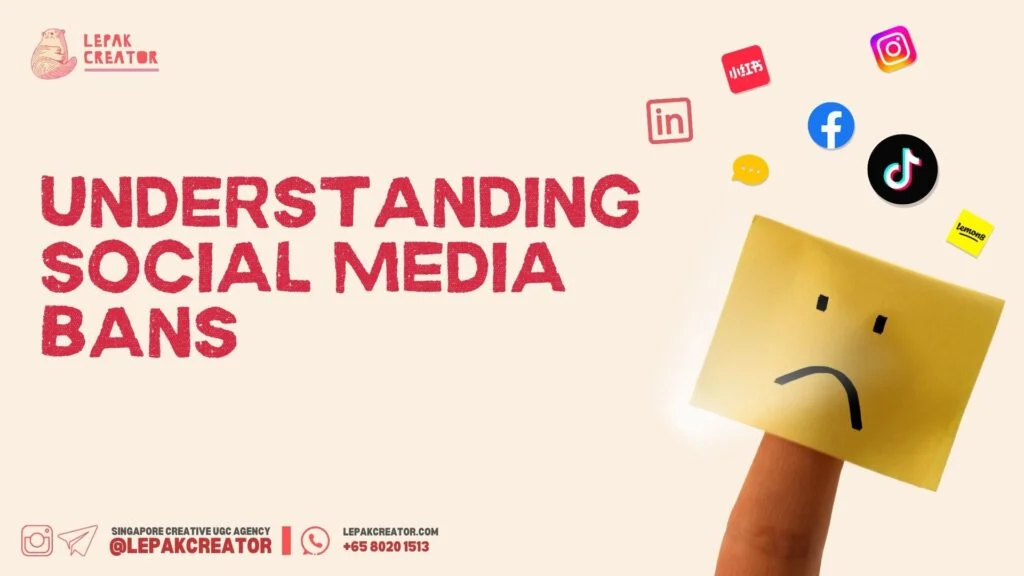
Whether it’s to enforce community guidelines or limit disruptive behavior, bans can take different forms. In this article, we’ll dive into the types of social media bans and highlight which platforms commonly enforce them, such as Instagram, Facebook, TikTok, Lemon8, RedNote, and LinkedIn.
What Social Media Bans Are
A social media ban occurs when a platform restricts or removes a user account due to violations of its terms of service or community guidelines. Bans can be:
- Temporary: Suspensions lasting a few days or weeks
- Permanent: Full account removal, often irreversible
- Shadowbans: Reduced visibility without a formal notice
Statistics:
- In 2023, over 10 million accounts were removed from Instagram for policy violations.
- Around 70% of banned users reported difficulty restoring accounts even when they believed their content was compliant.
Why Accounts Get Banned
1. Content Violations
Posting illegal, inappropriate, or copyrighted material can trigger bans. Even unintentional mistakes, such as using stock images incorrectly, can create problems.
2. Suspicious Activity
Bots, excessive automation, or rapid following/unfollowing behavior often triggers security systems.
3. Multiple Reports
If other users report an account repeatedly, the platform may impose restrictions while reviewing.
4. Algorithmic Enforcement
Platforms increasingly rely on AI to detect violations, which can sometimes result in false positives — banning accounts without manual review.
Types of Social Media Bans
Social media platforms use different types of bans or restrictions to ensure a safe, welcoming, and compliant environment. These bans can range from limiting specific actions to completely shutting down a user’s account. The most common bans include:
1. Shadow Ban
A shadow ban occurs when a user’s content is quietly hidden from others, but the user is unaware. It’s often used to curb spammy behavior, misinformation, or content that violates platform rules without alerting the user. A user affected by a shadow ban may not notice an immediate change, but their content won’t show up in feeds, searches, or under hashtags, making it harder for them to reach their audience.
Platforms that commonly apply this:
- Instagram: Often applied to users who use banned hashtags or violate spam policies.
- TikTok: Creators who engage in excessive self-promotion or controversial behavior may experience shadow banning.
2. Hard Ban (Permanent Ban)
A hard ban is when a user’s account is permanently removed from the platform. This ban is often applied after repeated violations or extremely severe breaches of a platform’s terms of service. Users who are permanently banned lose all access to their content and the platform entirely.
Platforms that commonly apply this:
- Facebook: Typically issued for severe violations such as spreading hate speech or engaging in coordinated misinformation campaigns.
- TikTok: TikTok has been known to permanently ban users who continuously breach community guidelines.
- RedNote: This platform, focused on video and content creation, will permanently ban users who engage in illegal activities or repeat violations.
3. Soft Ban (Temporary Ban)
A soft ban is usually a temporary measure that restricts certain activities for a limited time. It’s typically used for minor infractions and can involve restrictions such as being unable to post content, comment, or use certain features for a specified period.
Platforms that commonly apply this:
- Instagram: When users violate minor guidelines like spamming or excessive tagging, they might face temporary suspensions from commenting or posting.
- LinkedIn: A user might be temporarily restricted from sending connection requests or messaging if they send too many in a short period.
4. Content Ban
When a specific post or piece of content violates a platform’s guidelines, it may be removed, but the user’s account may remain intact. This type of ban is usually applied when content promotes violence, hate speech, or misinformation, or when it violates intellectual property laws.
Platforms that commonly apply this:
- Facebook: Known for removing content that contains hate speech, graphic violence, or misinformation.
- TikTok: Violent, explicit, or misleading content will often be removed, especially when it goes against TikTok’s community standards.
- Lemon8: As a new social media platform, it’s actively removing content related to adult material, graphic violence, and hate speech.
5. Engagement Ban
An engagement ban restricts a user’s ability to interact with others on the platform. This can include limitations on liking posts, commenting, sharing content, or direct messaging. Engagement bans are often used to curb spam or inappropriate interactions.
Platforms that commonly apply this:
- Instagram: Users who excessively like, comment, or follow/unfollow can experience engagement bans.
- TikTok: Those who engage in spamming tactics (such as mass liking or commenting) may face restrictions.
- LinkedIn: Engagement bans often occur when users send repetitive, unsolicited messages or connection requests.
6. Account Suspension
Suspension is a temporary restriction on a user’s account, usually due to an infraction. Users are often given the chance to appeal the suspension or take corrective action to restore their access.
Platforms that commonly apply this:
- Facebook: Temporary suspensions are common for users who breach guidelines like sharing misleading news or engaging in hate speech.
- Instagram: If a user is caught violating community guidelines but hasn’t committed a serious infraction, their account might be temporarily suspended.
- RedNote: Known for suspending accounts when users engage in prohibited practices like spamming.
7. IP Ban
An IP ban blocks users from accessing the platform from a specific IP address. This is often a last-resort measure, implemented when a user tries to circumvent previous bans by creating new accounts.
Platforms that commonly apply this:
- TikTok: In cases of major violations, users who repeatedly create new accounts after being banned can face an IP ban.
- Facebook: Facebook also uses IP bans in cases where users persistently break platform rules even after multiple account suspensions.
8. Feature Ban
Feature bans restrict users from accessing specific features, such as live streaming, direct messaging, or sharing posts. This is typically implemented when users misuse or abuse these features.
Platforms that commonly apply this:
- Instagram: Users might be restricted from using features like Stories, Direct Messages, or Live Streaming if they breach rules.
- LinkedIn: LinkedIn can limit a user’s ability to send messages or post content if they are caught spamming.
Which Platforms Are Most Likely to Ban Users?
Each platform has its own set of rules and consequences for violating them. Below is a breakdown of where bans are commonly enforced:
- Instagram: Known for applying shadow bans, temporary suspensions, and content removal. Violations can include using banned hashtags, spamming, or violating community guidelines.
- Facebook: Tends to issue permanent bans for serious infractions but also employs temporary bans and content removals for violations such as hate speech or misinformation.
- TikTok: Often known for its hard bans and shadow banning due to its strict community guidelines, particularly around harmful content, spam, and misinformation.
- Lemon8: A newer platform where content related to explicit or violent themes is often swiftly removed.
- RedNote: While this platform is smaller, it’s strict about banning users who engage in illegal activities or violate their community standards.
- LinkedIn: Typically issues feature bans or account suspensions for spammy behaviors such as excessive connection requests or messages.
Why Not Every Account Is Recoverable
While temporary suspensions are often reversible, permanent bans can’t always be undone. Platforms may prioritize enforcement over individual appeals, particularly if:
- Violations are repeated
- Accounts were previously warned
- Automated systems flagged content as high risk
This is why a proactive strategy matters more than reactive measures.
How Social Media Bans Affect Branding
- Lost Visibility: Your content disappears from feeds, halting engagement.
- Decreased Trust: Customers may question the brand’s reliability.
- Wasted Investment: Professional content, ads, and designer work go unused.
A thoughtful approach — including adherence to guidelines, documenting intellectual property, and diversifying platforms — reduces these risks and protects your brand reputation.
Common Questions About Social Media Bans people are searching online:
What does it mean if my social media account is banned?
A ban can be temporary, permanent, or a shadowban. It occurs when platforms detect violations of policies or guidelines.
Can I get my social media account back?
Not always. Recovery depends on the type of ban, the platform’s policies, and whether prior violations exist.
How can I prevent social media bans for my business?
- Follow platform guidelines carefully
- Avoid rapid automation or suspicious behavior
- Verify ownership and maintain backups of your content
- Work with Marketing or Social media strategists like Lepakcreator to ensure designs and campaigns are compliant
What are common reasons small businesses get banned on Instagram?
Common reasons include copyright infringement, posting offensive content, account automation, and violating community standards.
How do professional designers unintentionally contribute to social media bans?
Sometimes designers use stock or AI-generated images without proper licensing, or design content that triggers automated moderation. Coordination between designers and compliance strategies is critical.
How Lepakcreator Helps Businesses Protect Their Accounts
Many business owners engage designers to create beautiful social media content but still struggle with compliance, engagement, and visibility. Lepakcreator assists by:
- Ensuring visuals and campaigns adhere to platform guidelines
- Designing content with brand compliance in mind
- Diversifying online strategy across multiple platforms to reduce reliance on one account
- Advising on intellectual property, moderation, and risk management
This approach helps brands maintain continuity even if one platform becomes temporarily or permanently unavailable.
Conclusion
Social media bans are designed to maintain a safe and respectful environment on various platforms, with different levels of enforcement depending on the violation. From shadow bans that limit visibility to hard bans that permanently remove users, social media companies take a wide range of actions to keep their communities compliant. Understanding these bans and how different platforms enforce them can help users stay on the right side of the rules, ensuring that their content remains visible and their accounts are secure.
Thoughtful online practices protect both visibility and reputation, ensuring investments in design and content continue to work. As you evaluate your social media strategy, are you prepared to protect your brand against unexpected bans?
We genuinely hope you found it helpful and gained valuable insights. If you ever require further assistance with your marketing endeavors, don’t hesitate to reach out to us. Our team is always ready to provide expert guidance and support. 👉🏻 Look out for the latest Marketing & related Tips @lepakcreator Telegram Channel!
Since you’re here, why not Read: