When we think of marketing, it’s easy to imagine flashy ads, viral social media campaigns, or global product launches. But the reality is that not all businesses—big or small, startup or legacy brand—market the same way. Each business category comes with unique resources, audience reach, and growth objectives, which shape how marketing is executed.
Marketing advice often sounds universal.
“Just post more.”
“Run ads.”
“Do SEO.”
“Go viral on TikTok.”
“Build a funnel.”
But one of the biggest reasons business owners get frustrated with marketing is this: not all businesses should market the same way.
For example, a local handmade jewellery shop focuses on personal interactions, community engagement, and social media storytelling. Its marketing is nimble, budget-conscious, and highly flexible, often driven by the business owner’s personal touch. On the other hand, a mid-sized printing company or boutique fitness studio may have dedicated marketing teams, structured campaigns, and partnerships, balancing digital and offline channels to capture regional markets.
Large multinational corporations, such as Samsung or Coca-Cola, operate on a much larger scale, running campaigns across multiple countries with glocalized messaging, celebrity endorsements, and advanced analytics to track customer behavior. Iconic brands like Louis Vuitton, Chanel, or Mandai Zoo go even further, combining global storytelling, immersive experiences, and cross-industry collaborations to engage audiences, drive loyalty, and build long-term brand equity.
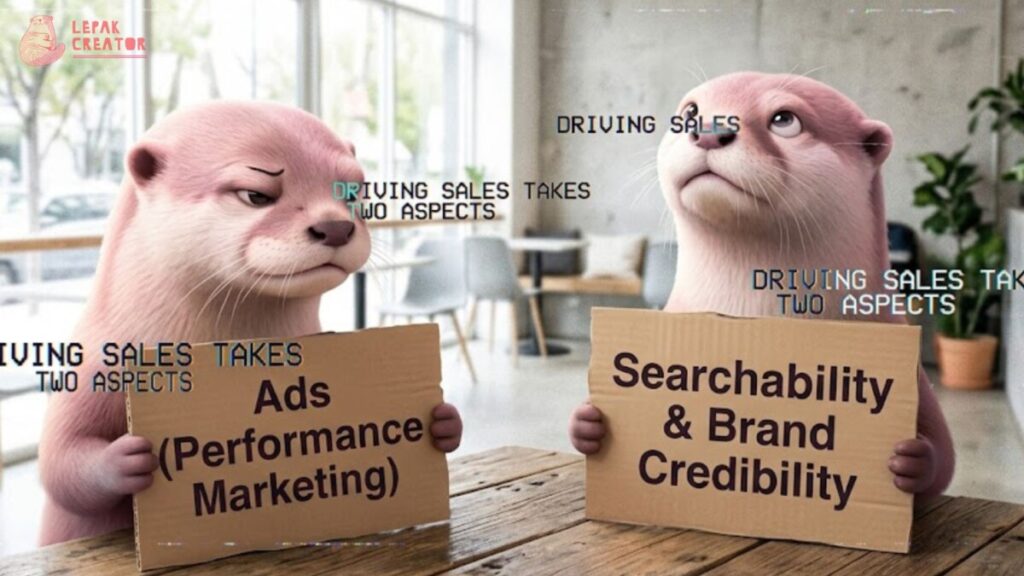
The key takeaway? Marketing strategies are not one-size-fits-all. A business’s size, structure, and audience determine how it approaches awareness, engagement, and conversion. Understanding this distinction is critical for anyone wanting to design marketing strategies that actually work.
Quick answer: Why don’t all businesses market the same way?
Not all businesses market the same way because different businesses sell in different conditions.
A business’s marketing strategy should match:
- who it sells to
- how people discover the business
- how long buyers take to decide
- how much trust is needed before purchase
- whether customers buy impulsively or after research
- whether the business depends on local footfall, referrals, content, sales calls, ecommerce, or repeat purchases
In short:
Marketing should fit the business model, not the trend.
Businesses can be broadly categorized into five types:
- Small Businesses / Micro-Enterprises – Local, niche-focused, personal marketing; rely on social media, local events, and word-of-mouth. Sales funnel: Awareness → Interest → Purchase → Loyalty.
- Start-Ups – Growth-oriented, digital-first, experimental; leverage influencers, paid social, email funnels. Funnel: Awareness → Consideration → Conversion → Retention → Advocacy.
- Mid-Sized Businesses – Regional reach, structured teams, CRM-driven campaigns; combine digital, offline, and partnership marketing. Funnel: Awareness → Lead Capture → Conversion → Retention → Loyalty → Advocacy.
- Large MNCs – Global reach, professionalized marketing, multi-channel campaigns, sponsorships, glocal adaptation. Funnel: Awareness → Interest → Consideration → Purchase → Retention → Loyalty → Advocacy → Community Engagement.
- Enterprise / Iconic Brands – Global and local campaigns, experiential marketing, merchandise, and strategic collaborations; focus on long-term brand equity. Funnel: Awareness → Engagement → Experience → Purchase → Loyalty → Advocacy → Brand Evangelism.
Each category also differs in customer journey, branding amplification, and marketing complexity, reflecting the resources, audience, and goals of the business.
Business Categories by Size
| Category | Typical Revenue / Employees | Key Characteristics |
|---|---|---|
| Small Business / Micro Enterprise | <$1M revenue / <10 employees | Local focus, niche audience, owner-led, informal processes, limited budget. |
| Start-Up | <$10M revenue, varies | Growth-oriented, scalable model, risk-taking, heavy reliance on digital/innovative marketing. |
| Medium / Mid-sized Business (SMB) | $10M–$100M / 50–500 employees | Structured departments, regional reach, invests in brand identity and marketing teams. |
| Large / MNC (Multinational Corporation) | >$100M / 500+ employees | Global reach, formal processes, professional marketing teams, strong brand recognition, advanced analytics. |
| Enterprise / Iconic / Legacy Brands | Billions in revenue | Market leaders, strong reputation, legacy brand, diversified revenue, advanced marketing ecosystems. |
Note: These definitions are fluid. Some start-ups can become MNCs quickly, and some SMBs remain regional.
Understanding that marketing does not work the same way for every business is essential for building effective strategies. While a small bakery can thrive on personalized social media posts and local collaborations, a start-up must experiment with digital funnels and influencer campaigns to attract early adopters.
Mid-sized businesses rely on structured marketing teams and partnerships to scale regionally, whereas large corporations invest heavily in multi-channel campaigns and global PR to maintain their market leadership. Iconic brands, like Mandai Zoo or Chanel, go even further, blending storytelling, immersive experiences, merchandise, and collaborations to cement brand equity and engage audiences worldwide.
The common thread across all sizes is the need to align marketing strategy with business resources, goals, and audience expectations. A one-size-fits-all approach rarely works; strategies that succeed in small, agile environments may fail in complex global operations, and vice versa. By recognizing the nuances of business category, marketers can design campaigns that not only generate awareness but also create meaningful engagement, drive conversions, and build long-term loyalty.
For businesses, understanding these distinctions isn’t just academic—it’s practical. It helps define budgets, choose the right channels, craft messaging, and measure success effectively. In essence, smart marketing starts with knowing where your business stands, and what strategies fit its scale, audience, and ambitions.
Marketing strategies are not one-size-fits-all. Whether you’re a start-up finding your footing, a mid-sized business scaling regionally, or a well-established brand seeking innovation, the right strategy can make all the difference.
Questions coming up repeatedly among business owners
Q: How can small businesses in Singapore make content stand out?
A: Focus on localized, specific topics, answer questions competitors haven’t addressed, and provide tools, checklists, or case studies relevant to your audience.
Q: Why should small businesses avoid targeting too broad an audience?
A: Broad targeting often drives vanity metrics like reach and impressions but fails to convert because it includes many low-intent users. Precision increases relevance and saves limited budget by focusing on audiences most likely to buy.
Q: How can Singapore small businesses measure their digital marketing ROI?
A: Use tracking tools like Google Analytics, CRM platforms, and conversion pixels to map customer actions back to campaigns. Without tracking, it’s impossible to know what drives business growth rather than noise.
Q: How do I find a reliable content strategist in Singapore?
A: Look for agencies that take a “strategy-first” approach, not just execution. That said, some strategy-heavy or analytics-focused teams may lack strong visual direction, as their work is often driven more by data and performance metrics. Ideally, you want a balance—an agency that understands both strategy and aesthetics. At LepakCreator, we combine data-driven thinking with visually engaging content to deliver both impact and appeal.
Q: Is performance marketing better than branding?
A: Not necessarily. Performance marketing works best when branding already exists to support trust and conversion.
Q: How does branding affect Google search results?
A: Strong branding increases branded searches, content engagement, and consistency signals, which improves organic discoverability.
Q: Can branding reduce advertising cost?
A: Yes. Strong branding typically improves ad performance metrics, reducing cost per acquisition over time.

We offer a free consultation to help your business:
- Identify the best channels for your audience
- Optimize your sales funnel and customer journey
- Strengthen your brand presence and storytelling
- Plan campaigns that balance budget, reach, and impact
Book your free consultation today and let’s explore how your marketing can drive growth and engagement!
A good marketing strategy is not the one that looks the busiest.
It is the one that matches business model, buyer behaviour, and buying intent most accurately.
For many businesses, better marketing is not about doing everything.
It is about doing the right things in the right order for the type of business you actually are.
If you are trying to figure out why your marketing feels hard, inconsistent, or ineffective, that is often the first place to look: maybe the strategy is not bad — maybe it simply does not fit the business.
👉🏻 Look out for the latest Marketing & related Tips @lepakcreator Telegram Channel!