Understanding your target audience is the foundational step in strategic branding, customer acquisition, and effective online marketing. Yet, two concepts that are often used interchangeably — target audience demographic and target audience persona — are not the same. Misunderstanding these can create fuzzy marketing strategies and wasted budget.
At Lepakcreator, we help purposeful brands and thoughtful creators go beyond shallow assumptions to build meaningful connections with their audiences — and this difference between demographic and persona is where that transformation begins.
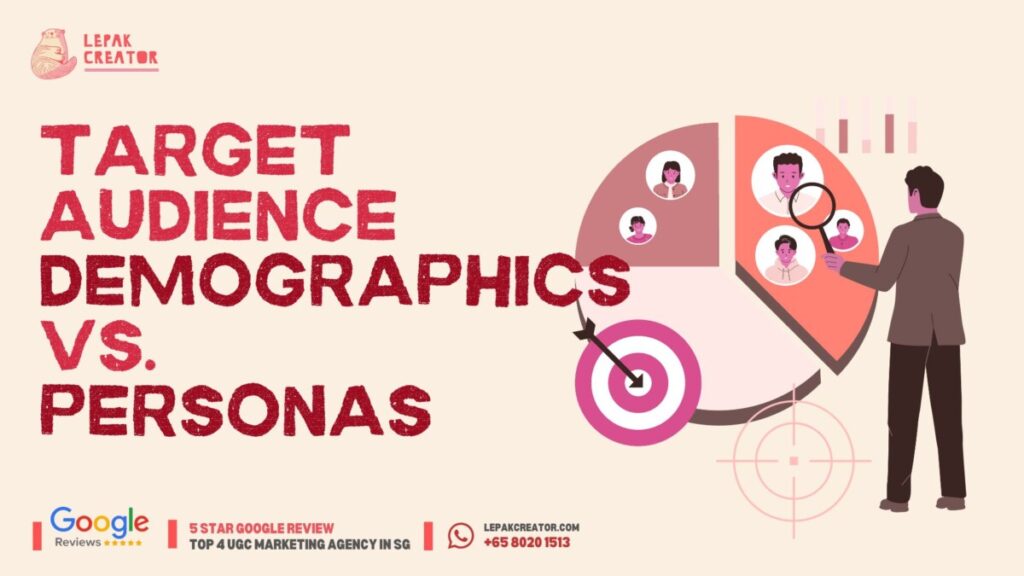
Demographics vs Personas: Same Audience, Different Depths
What Target Audience Demographics Actually Are
Demographics are surface-level identifiers:
- Age range
- Gender
- Location
- Income bracket
- Industry or job role
For example:
“Women, 30–45, Singapore-based, small business owners”
Demographics help platforms like Meta, Google, and TikTok decide where to show your content.
They are useful — but they are not insight.
– Demographics tell you who your audience is on paper.
– They do not tell you how they think, decide, hesitate, or feel.
What a Target Audience Persona Really Is
A persona is a thinking human being, not a data point.
It includes:
- Core motivations and fears
- Beliefs about success, money, and visibility
- Emotional resistance (e.g. “I don’t want to sound fake”)
- Decision triggers (what finally makes them act)
- What they avoid, not just what they want
For example:
“A value-driven business owner who values integrity, feels uncomfortable with aggressive marketing, wants clarity before growth, and is tired of copying strategies that don’t feel aligned.”
– This is where brand voice is born.
– This is where trust is built.
Think of personas as “characters” you can speak to — not just about.
For example:
“Startup Stella” — a 29-year-old founder in Singapore trying to grow her health-food e-commerce brand, feels overwhelmed with social media content planning and ad budgets.
Personas answer:
“What do they want? What problems keep them up at night? What motivates them to buy?”
This emotional and behavioural depth is what makes marketing relevant and compelling.
Why Differentiating the Two Changes Everything
“Inconsistency is often an identity problem, not a skill problem.”
When you only use demographics:
- Your content sounds generic
- Your brand borrows language from louder industries
- Marketing feels transactional instead of relational
When you understand personas:
- Messaging becomes calmer, clearer, and more confident
- Content decisions become easier (you know what not to say)
- You stop chasing trends that don’t fit
– Clarity replaces hustle.
– Alignment replaces pressure.
This is especially critical for businesses that:
- Are purpose-led, not sales-driven
- Want slow, sustainable growth (even when it feels uncomfortable)
- Care about trust more than virality
“If marketing feels fake, you’re using someone else’s voice.”
Why the Difference Matters
A. Conversion Happens When You Speak Their Language
Demographics tell you who they are. Personas tell you how to talk to them. Generic ads based only on demographics often fail because they lack emotional relevance — something Lepakcreator emphasises in brand messaging frameworks.
B. Better Channel Decisions
Knowing where your audience spends time (LinkedIn, TikTok, YouTube, Telegram) depends on understanding their behaviours, not just their age group or gender.
C. Lower Ad Waste and Higher ROI
Targeting a broad segment can generate clicks — but personas guide you to high-intent audiences who are more likely to convert.
D. Creative Briefs with a Purpose
Personas inform not only what you say but how you design it — the tone, visuals, and value propositions that resonate.
How Lepakcreator Turns This Into Growth
Lepakcreator’s methodology combines audience research with creative strategy:
- Data-informed demographic filtering
- Persona development using behavioural and psychographic insights
- Messaging frameworks tailored to customer pain points
- Campaign optimisation based on real audience responses
This process reduces guesswork, shortens buyer journeys, and improves conversions.
The Deeper 10% Most People Miss in Marketing
Most people ask:
“What should I post?”
Better questions are:
- “Why does this message feel uncomfortable?”
- “What part of my brand am I avoiding?”
- “Who am I trying to impress — and why?”
Understanding these deeper layers:
- Reduces content burnout
- Shortens buyer hesitation
- Builds quiet authority
“Slow growth feels wrong in a world obsessed with speed.”
But it is often the most sustainable path.
How Personas Shorten the Buyer Journey
When personas are clear:
- Your audience recognises themselves faster
- Trust builds before the sales conversation
- Fewer objections need to be “handled”
This is how you increase purchase confidence without hard selling.
People also asked online:
Q: What is a target audience demographic?
A: A demographic is a statistical segment defined by age, gender, income, job title, and location. It tells you who your potential customers are.
Q: What is a buyer persona?
A: A persona is an in-depth profile combining demographics with behaviours, goals, motivations, and challenges to guide personalised marketing strategy.
Q: Can I use demographic data alone for branding?
A: You can start with demographic data, but without personas your messaging may lack relevance and emotional appeal.
Q: How does persona development impact ROI?
A: Personas connect brand messaging to real audience needs, reducing wasted ad spend and increasing engagement and conversions.
Q: Are there free tools for audience research?
A: Yes — Google Analytics, social insights, customer interviews, and surveys all help build personas without high cost.
Q: How do Singapore small business owners define their audience for ads?
A: Use Singapore-specific analytics (Google Trends SG, Facebook Insights SG) and local insights from customer feedback.
Q: How does cultural context in Singapore affect customer personas?
A: Local preferences, language, spending habits, and festive calendars (Chinese New Year, Hari Raya) influence buying triggers.
Q: What marketing channels work best for SMEs in Singapore?
A: Instagram, TikTok, Telegram newsletters, and Google Business Profiles often drive local engagement.
Strategic Branding & Omni-Channel Marketing for Thoughtful Business Owners
Lepakcreator’s approach integrates branding and omni-channel marketing to solve the core pain points small business owners often face in Singapore:
Pain Point 1: Overwhelmed by Digital Marketing
Many small business owners struggle to convert likes into orders and to craft content that drives engagement beyond vanity metrics.
Solution: Persona-based content calendars and channel optimisation — guiding where and how to post.
Pain Point 2: High Competition and Low Visibility
Home-based brands and MSMEs find it hard to stand out in saturated social feeds.
Solution: Differentiated storytelling, strategic branding, and consistent messaging across channels.
Pain Point 3: Unsustainable Costs (Rent/Marketing Spend)
Rising operational costs and expensive tech adoption make marketing efficiency essential.
Solution: Lean audience building with focus on high-intent segments and low-waste channels.
Singapore Context: Why This Matters Now
Small businesses in Singapore face stiff competition online and offline. For example:
- Many small businesses struggle to convert social media engagement into real orders, despite posting regularly.
- Rising commercial rents are pushing some F&B and retail brands to close physical storefronts, forcing them to improve online presence.
- MSMEs experience digitalisation cost barriers, making targeted marketing a key way to justify investments.
These pressures underline the need for precise audience understanding and effective online strategies — exactly what Lepakcreator’s frameworks provide.
Final Reflection
Demographics help you reach people.
Personas help people recognise themselves in you.
And recognition — not persuasion — is what builds trust.
That is the work IreneKreations is here to guide you through:
Not louder marketing.
Not faster posting.
But clearer thinking, calmer confidence, and aligned communication — even in an AI-driven world.