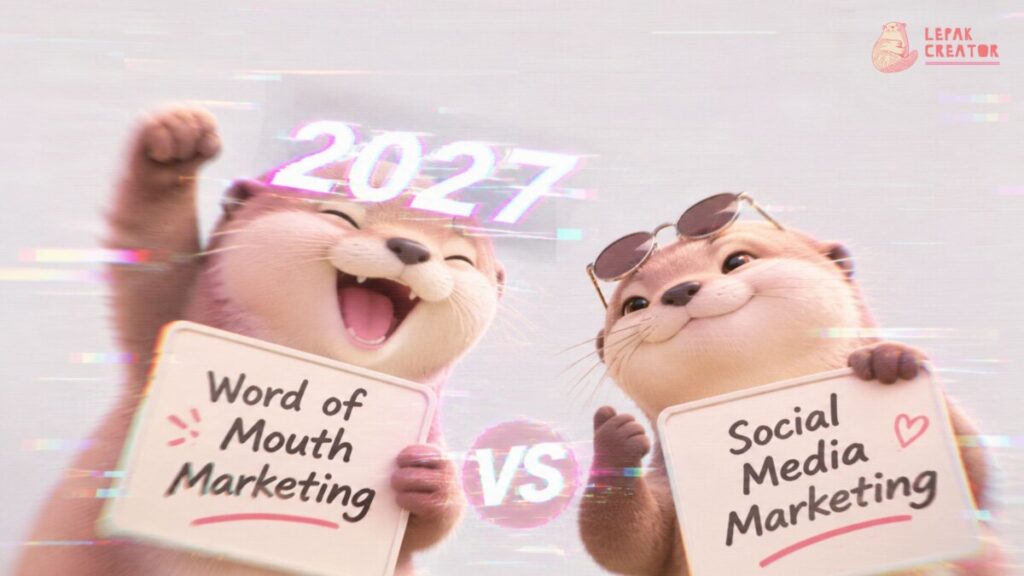
“We’re done with social media.”
It is a sentence many business owners have started saying over the past few years.
Some are tired of declining organic reach. Others are frustrated by constantly changing algorithms, expensive advertising costs, endless content creation, and the pressure to chase trends just to remain visible.
Instead, many businesses are returning to what they believe worked before: word of mouth.
After all, recommendations from friends have always been powerful.
But here’s the important question:
Can word of mouth alone still grow a business in 2027 and beyond?
The answer is more complicated than a simple yes or no.
Word of mouth has never stopped being valuable. In fact, it may be more influential than ever.
However, relying only on referrals while abandoning your online presence may actually reduce future word-of-mouth opportunities instead of increasing them.
The businesses that continue growing are rarely choosing one over the other—they’re combining both.
Summary
Many businesses are reducing their investment in social media because of rising advertising costs, lower engagement, creator fatigue, and algorithm changes. At the same time, they are relying more heavily on customer referrals and personal recommendations.
While word of mouth remains one of the highest-converting marketing channels, it has limitations. It cannot always scale, reach new audiences, or provide continuous visibility.
Modern buyers usually hear about a business through someone they trust—but before making a purchase, they often search online for reviews, social proof, websites, blog articles, Google listings, or social media profiles.
Today’s customer journey typically combines both offline recommendations and online validation.
Businesses should not think of word of mouth and digital marketing as competitors. Instead, digital content should amplify referrals and make recommendations easier to trust.
What Is Word of Mouth Marketing?
Word of mouth marketing refers to customers naturally recommending a business, product, or service to other people.
Recommendations may happen through:
- Friends
- Family
- Colleagues
- Online communities
- Facebook Groups
- Telegram Groups
- WhatsApp chats
- Workplace discussions
- Networking events
- Online reviews
- Community forums
Unlike paid advertising, word of mouth depends on trust.
People generally believe recommendations from people they know more than advertisements because those recommendations feel authentic and experience-based.
In today’s digital world, however, word of mouth often begins offline but finishes online.
Someone may recommend a café during lunch.
The potential customer then immediately searches:
- Is this place good?
- What do the reviews say?
- Is it still open?
- What do recent customers think?
- Are the prices reasonable?
Without online information, even a strong recommendation may not become a sale.

Why Businesses Are Leaving Social Media
Many business owners are experiencing digital fatigue.
Here are several reasons why.
1. Organic Reach Continues to Decline
Growing followers no longer guarantees visibility.
Even businesses with thousands of followers often reach only a small percentage of their audience without paid promotion.
Many owners feel they are creating more content while seeing fewer results.
2. Content Creation Never Stops
Years ago, one photo could perform well.
Today businesses feel pressured to create:
- Reels
- Shorts
- TikTok videos
- Stories
- Carousels
- Livestreams
- Behind-the-scenes clips
- Trend-based videos
The workload has increased significantly.
3. Algorithms Constantly Change
Strategies that worked six months ago may stop working overnight.
Businesses become frustrated when they spend hours producing content that receives little exposure.
4. Paid Advertising Costs Continue Rising
Competition has increased across nearly every industry.
Higher advertising costs mean businesses must generate stronger creative content just to maintain previous results.
5. Everyone Looks Similar
Many businesses copy trending content.
Ironically, trying to stand out often results in everyone creating nearly identical posts.
This creates content fatigue among audiences.
Why Word of Mouth Still Works
Despite digital challenges, referrals remain incredibly valuable.
Why?
Because trust shortens decision-making.
When someone says,
“I’ve used this company before.”
or
“They’re really good.”
much of the uncertainty disappears.
Benefits include:
- Higher conversion rates
- Lower acquisition costs
- Strong customer loyalty
- Better long-term relationships
- Higher customer lifetime value
Word of mouth is especially powerful for:
- Professional services
- Medical clinics
- Home renovation
- Tuition centres
- Wedding vendors
- Financial consultants
- Restaurants
- Beauty services
- Local businesses
Why Quitting Social Media Completely Is Risky
Here is where many businesses misunderstand modern consumer behaviour.
Word of mouth often starts the conversation.
The internet finishes it.
Today’s buyers rarely purchase immediately after receiving a recommendation.
Instead they search.
They compare.
They verify.
They read reviews.
They watch videos.
They browse photos.
They check Google.
They look for evidence.
If they cannot find enough information, uncertainty increases.
Sometimes they choose another business that appears more active online.
The New Customer Journey in 2027
A typical buying journey now looks like this:
Friend recommends a business
↓
Customer searches Google
↓
Reads reviews
↓
Visits website
↓
Reads blog article
↓
Checks Instagram
↓
Looks at recent customer photos
↓
Compares competitors
↓
Makes purchase
Notice something important.
Word of mouth started the process.
Digital content completed it.

Why Social Media Is No Longer Just Social Media
Many businesses still think social media exists only for entertainment.
That is no longer true.
People now use platforms as search engines.
They search for:
- Restaurants
- Beauty salons
- Travel tips
- Product reviews
- Tutorials
- Local recommendations
- Before-and-after results
Even if someone never follows your account, your content can still influence purchasing decisions.
Your social media profile becomes part of your digital reputation.
The Real Goal Is Digital Proof, Not Daily Posting
Businesses often believe they must post every day.
Not necessarily.
Instead, focus on creating useful proof.
Examples include:
- Customer testimonials
- Before and after photos
- Case studies
- Educational videos
- Frequently asked questions
- Product demonstrations
- Staff introductions
- Company values
- Behind-the-scenes processes
These pieces of content continue building trust long after they are published.
Why Blogs Are Becoming Important Again
Ironically, while some businesses are leaving social media, many are rediscovering blogging.
Why?
Because blog articles answer questions buyers are already searching.
Good articles continue attracting visitors for months or even years.
Unlike social media posts that disappear quickly, blog content compounds over time.
Useful blog topics include:
- How to choose the right service
- Common mistakes buyers make
- Cost guides
- Beginner’s guides
- Comparison articles
- Frequently asked questions
- Industry myths
- Local buying guides
These articles also help AI search engines understand your expertise.
Real Business Examples
Example 1: Local Café
Customers recommend the café.
New customers search Google.
They see updated photos, menus, reviews, and location details.
The recommendation becomes a visit.
Example 2: Interior Designer
A homeowner receives a referral.
Before contacting the designer, they browse completed projects, blog articles, testimonials, and design philosophy.
The online content confirms the recommendation.
Example 3: Dental Clinic
Someone hears about the clinic from a colleague.
Before booking, they search:
- Dentist near me
- Invisalign reviews
- Clinic opening hours
- Parking information
- Patient testimonials
Without digital presence, trust decreases.
Verdict
Word of mouth still matters
- Personal recommendations from friends, family and existing customers
- Strong customer relationships and repeat business
- Referrals built through positive customer experiences
But customers still search online
- Search Google before contacting a recommended business
- Check websites and social media to assess credibility
- Compare services, pricing and alternatives
What businesses risk by abandoning digital marketing
- Losing visibility among customers who discover businesses through search
- Giving competitors more opportunities to capture potential customers
- Missing out on customers who need more information before making a decision
Digital credibility reinforces referrals
- A professional website that explains what you offer
- Consistent social media presence that showcases your expertise
- Customer testimonials and case studies that build confidence
Search visibility creates new opportunities
- Local SEO and Google Business Profile optimisation
- Helpful blog articles that answer customers’ questions
- Search-friendly content that supports Google and AI search discovery
Content builds trust before the first conversation
- Educational posts that demonstrate industry knowledge
- Frequently asked questions that address customer concerns
- Real customer experiences and practical advice
Community creates long-term relationships
- Engage with relevant online communities
- Participate in industry conversations
- Stay visible and useful beyond the initial sale
The takeaway: Word of mouth helps people discover you through recommendations. Digital marketing helps them verify, understand and trust you. Relying on only one means potentially missing out on the other half of the customer journey.

Frequently Asked Questions
Is word of mouth better than social media marketing?
Neither is universally better. Word of mouth creates trust, while social media expands visibility and reinforces credibility. Together they create a stronger customer acquisition strategy.
Can businesses survive without social media?
Some businesses can survive without active social media, especially if they have loyal customers and strong referral networks. However, most modern consumers still expect to find online information before making purchasing decisions.
Why are businesses leaving social media?
Common reasons include declining organic reach, increasing advertising costs, content fatigue, algorithm changes, and limited return on investment.
Does word of mouth still work in 2027?
Yes. Word of mouth remains one of the highest-converting marketing channels because recommendations from trusted people reduce uncertainty during purchasing decisions.
Why do customers search online after getting recommendations?
People want confirmation. They often verify reviews, business legitimacy, pricing, customer experiences, portfolios, and recent activity before making contact.
Is blogging more valuable than posting every day?
For many businesses, well-written educational blog articles generate longer-term traffic than daily social media updates because they answer search intent and remain discoverable for years.
How does local SEO support word of mouth?
Local SEO helps recommended businesses become easier to find. Google Business Profiles, customer reviews, location pages, and local content increase confidence after someone receives a referral.
What should a small business prioritise with limited marketing budget?
Start by building trust assets:
- A professional website
- Google Business Profile
- Customer reviews
- Helpful blog articles
- Basic social media presence
- Consistent branding
These assets continue working long after they are created.
Why should Singapore businesses maintain social media even if referrals are strong?
Many customers in Singapore verify businesses through Google Search, Google Maps, Instagram, Facebook, TikTok, and reviews before making enquiries.
How can local businesses improve word of mouth online?
Encourage customer reviews, answer common questions through blog articles, share real customer experiences, and maintain updated business information across online platforms.
What should customers search before choosing a local business?
Useful searches include:
- Best printing company near me
- Trusted renovation contractor in Singapore
- Affordable digital marketing agency in Singapore
- Best café with Wi-Fi in Singapore
- Local florist with same-day delivery
These long-tail searches indicate strong purchase intent.
Conclusion
Businesses are not wrong for valuing word of mouth.
It remains one of the most trusted forms of marketing ever created.
The mistake is believing referrals can replace digital visibility.
In reality, referrals and online presence now work together.
Word of mouth opens the door.
Your website, reviews, blog articles, search visibility, and social proof give customers the confidence to walk through it.
Instead of asking, “Should we quit social media?”, a better question is:
“How can we spend less time chasing algorithms while building digital trust that supports every referral we receive?”
The businesses that answer that question well will be the ones that continue earning trust, shortening buyer journeys, and growing sustainably in the years ahead.