Many business owners create educational content on social media with the hope that it will change minds.
They believe that if they explain enough, teach enough, and prove enough, the “right” people will eventually understand the value of their service or product.
But this is a misunderstanding of what education-based content is actually for.
Educational posts are not designed to convince people who don’t believe, don’t value, or don’t see the problem yet.
They are designed to attract, filter, and resonate with those who already feel the pain and are actively seeking clarity, solutions, or validation (your target persona).
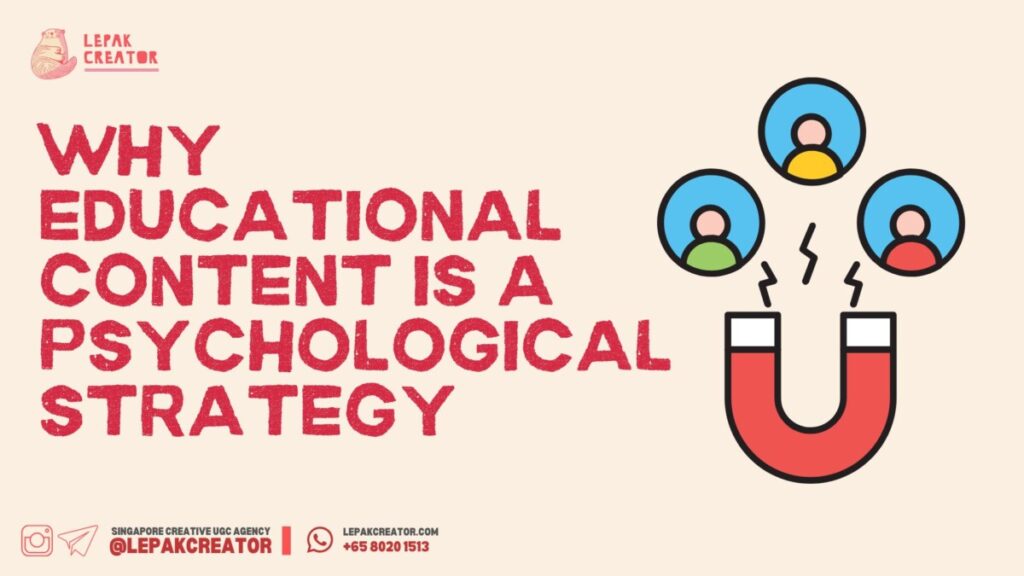
Education Is a Magnet, Not a Megaphone
Education on social media works as a signal, not a persuasion tool.
When someone reads an educational post and thinks:
- “This explains exactly what I’m going through”
- “Finally, someone understands this problem”
- “This is what I’ve been trying to articulate”
That person was already aware—consciously or subconsciously—that they had a need.
Your content didn’t create the demand.
It simply helped them recognise that you are the right guide.
Because belief precedes education, not the other way around.
Why Trying to Convince the Unaware Is a Losing Game
Trying to educate people who don’t believe they need your service leads to:
- Endless explaining
- Defensive conversations
- Price objections framed as “logic”
- Requests for proof that no proof will ever satisfy
This happens because the resistance is not intellectual—it’s philosophical.
They don’t reject your content because they don’t understand it.
They reject it because it conflicts with how they view:
- Money
- Risk
- Growth
- Control
- Time
No carousel, reel, or long caption can override that.
Education Clarifies Fit, Not Demand
The real role of educational content is to clarify alignment.
It helps the right audience:
- Understand why a problem exists
- Put language to frustrations they already feel
- See the long-term consequences of ignoring it
- Trust that you understand the complexity of their situation
At the same time, it filters out the wrong audience.
That is not a failure of your content.
That is your content doing its job.

The Right Audience Doesn’t Need Convincing—They Need Confidence
People who are ready don’t ask to be convinced.
They ask questions like:
- “Is this the right approach for my stage?”
- “How do we apply this properly?”
- “What happens if we do this incorrectly?”
- “How long before we see compounded results?”
Educational content gives them confidence, not persuasion.
It reassures them that:
- They’re not imagining the problem
- The challenge is more complex than surface-level tactics
- There is a structured way forward
Why Businesses Grow Faster When They Stop Educating Everyone
When you stop trying to convince everyone, you gain:
- Clearer messaging
- Stronger positioning
- Better clients
- Shorter sales cycles
- Less emotional exhaustion
Your content becomes:
- Sharper
- More opinionated
- More honest
- More effective
And paradoxically, that clarity attracts more of the right people.
What people are most eager to find out online
Q: What is UGC and why does it matter for Singapore brands?
A: UGC (user-generated content) is real content created by customers or creators. It builds trust, relatability, and stronger engagement—making it highly effective for Singapore brands. LepakCreator structures UGC into a consistent, strategy-led content system that drives visibility and conversions.
Q: How do I find the right social media creators for my brand?
A: Don’t just look at follower count—focus on audience fit, content relevance, and authentic engagement. The right creators already speak to your target market. LepakCreator identifies and matches brands with aligned creators using data, positioning, and content strategy for stronger results.
Q: Does posting more content always improve marketing results?
A: Not necessarily. More posts, reels, captions, or blogs can create activity—but not always real progress. Without strategy, consistency, and intent alignment, it often leads to noise instead of growth. Effective marketing focuses on the right content mix, not just higher volume.
Q: What does credibility on social media mean?
A: Social media credibility refers to how your audience perceives your account as trustworthy, consistent, and knowledgeable based on your strategised content, brand tone, and consistent interactions over time.
For anyone starting a new social media or online account, credibility is not something you claim — it is something you intentionally build. This is especially important because users today are highly cautious and will quickly judge whether an account feels like a genuine personal brand, a business, or something untrustworthy.
Ultimately, what makes you different is not just what you sell or post — it is how you build perception over time. Credibility comes from repeated, consistent actions that help people feel, “This account is real, helpful, and worth following,” instead of feeling like it exists only to sell something.
Q: Should small businesses in Singapore rely on AI for content?
A: AI should support—not replace—your content strategy.
Q: What is low-value content?
A: Low-value content is content that lacks depth, relevance, or clear intent match—so it doesn’t help users solve a problem, answer a query, or take meaningful action. At LepakCreator, we optimise it by rebuilding content around search intent, clarity, and AI-ready structure for better visibility and engagement.
Q: Why does posting more not guarantee leads?
A: Because volume alone doesn’t drive conversions—unclear messaging, weak positioning, or lack of search intent alignment will limit results. LepakCreator helps fix this by sharpening value clarity, content strategy, and AI-ready SEO structure (AEO/GEO/social SEO) so each post attracts the right audience, not just more views.
Final Thought
Educational content is not about converting skeptics.
If someone doesn’t believe they need what you offer, your job is not to convince them.
Your job is to speak clearly enough that the right people recognise themselves immediately.
That’s not exclusion.
That’s strategy.